







The summer Toronto learned to spread out
There is a specific feeling to standing in the middle of a street that is usually full of traffic. The pavement is wider than you remember. Voices carry. A patio you have walked past a hundred times suddenly has room to breathe onto the road. Toronto has spent the last few summers chasing that feeling, and this year the city decided it wants a lot more of it.
Car-free streets are no longer a one-weekend novelty here. They are becoming part of how the city plans its warm months, and a recent council vote made that direction official. If you have been looking for the best low-cost way to spend a Toronto Saturday, walking a street built for people instead of parking is near the top of the list.
Where to walk car-free right now
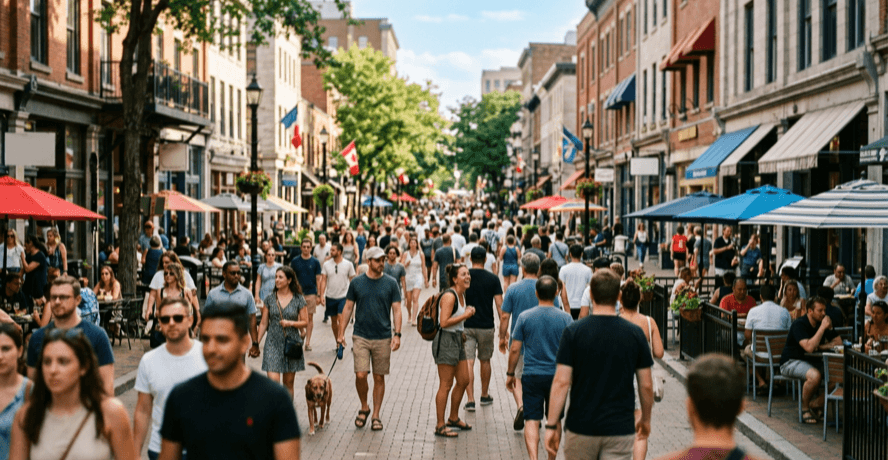
The headline destination this summer is Church Street, where a stretch between Wellesley and Alexander has been closed to cars and handed over to pedestrians. It is the kind of place that rewards showing up with no plan. Patios lean into the roadway, the crowd sets the pace, and the whole strip feels like an ongoing block party rather than a detour around construction.
Church Street is the most talked-about pilot, but it is not the only place to find open pavement. Kensington Market has run its car-free Sundays for years, turning the neighbourhood's narrow lanes into a slow-moving stream of shoppers, buskers, and people eating something over a napkin. The waterfront's Martin Goodman Trail and the seasonal closures along parts of the lakeshore give you longer, flatter stretches when you want distance rather than density. Major event days, from festivals to street fairs, still deliver some of the biggest car-free zones the city sees all year.
The pattern across all of them is the same. Take away the cars and Torontonians fill the space almost immediately. That reliability is exactly what pushed the idea from experiment to policy.
Inside the Church Street pilot
The Church Street pilot is worth understanding because it shows both the appeal and the real cost of doing this well. The project started with a budget of roughly $150,000. By the time it was running, that figure had grown to about $500,000, driven mostly by added security costs.
That jump matters. It is easy to picture a car-free street as simply moving a few barricades and letting people walk. In practice, closing a busy downtown corridor for a season means staffing, safety planning, and coordination with the businesses and residents who live and work along it. The higher price tag is not a sign the idea failed. It is a sign the city is treating pedestrianization as real infrastructure rather than a pop-up, and that honesty about cost is part of what the next phase has to solve.
For a visitor, none of that shows up on the street itself. What you see is a corridor that feels calmer and more social than it does the other eleven months of the year. What the numbers show is a city figuring out the true cost of building these spaces at scale.
The plan to add more streets by 2027
The bigger story is what council decided to do next. In a 16 to 6 vote, councillors backed the creation of a Pedestrian Streets Program, a formal effort to identify more downtown corridors that could go car-free on a seasonal or year-round basis, with the buildout starting in 2027.
The motion, led by Councillor Josh Matlow, leans on a simple observation the city has watched play out for years. Whenever a Toronto street closes to traffic for a festival or a major event, people show up in numbers. The program is an attempt to stop treating those closures as one-offs and start planning them as a recurring feature of downtown life.
Nothing about that timeline means you have to wait. The corridors already running this summer are the preview, and they are the reason the program exists in the first place. If you want a say in which streets get chosen next, the most useful thing you can do is turn up, spend time, and show that the demand is real.
How to make the most of it this summer
Car-free streets are one of the best free things Toronto offers when the weather cooperates. You do not need tickets, a reservation, or a plan. You need comfortable shoes and a couple of hours.
A few things help. Go on foot or by transit, since the whole point is that you will not want a car nearby. Aim for late afternoon into early evening, when patios fill and the light is good. Bring cash for the vendors and small shops that come alive on these strips. And treat the street like a destination in itself rather than a route to somewhere else, because the wandering is the entire experience.
If you are mapping out a summer of low-cost outings, car-free streets pair naturally with the rest of the season's free and cheap options, and they change character enough from block to block that no two visits feel the same. Toronto spent years proving it would fill these streets given the chance. This is the summer to take the city up on it.
For more ways to spend a weekend around the city, browse our latest things to do, and if you are watching your budget, our roundup of cheap things to do in Toronto this summer pairs perfectly with a car-free afternoon.














Recommended for you
Breaking Down the Elements of a Masterpiece Painting
The Revival of Classical Art in a Digital Age
Must-See Art Exhibitions Around the World This Year
The Revival of Classical Art in a Digital Age